Tuberculosis (TB) health education
2026/03/17
1. What is TB?
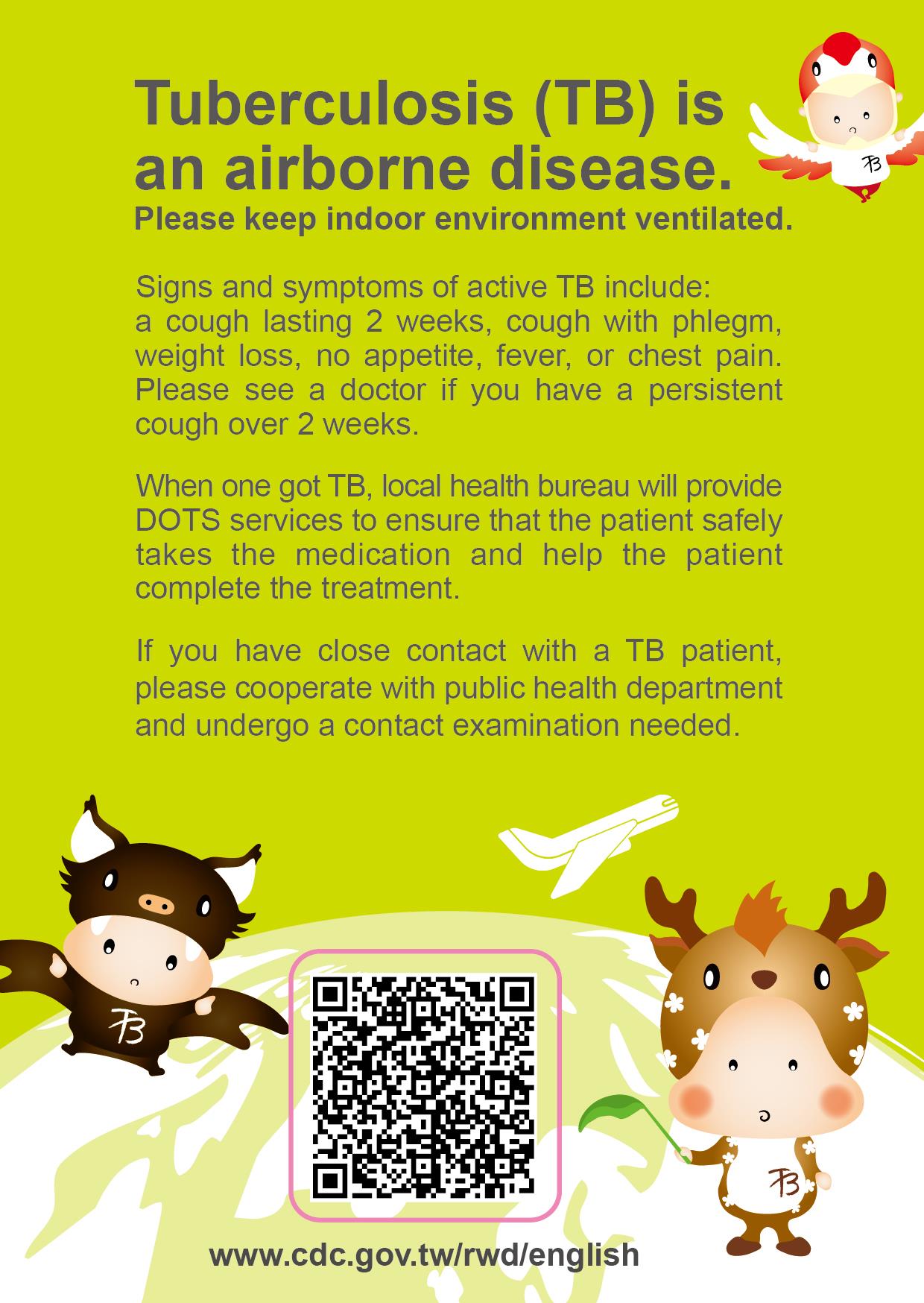
Definition: Tuberculosis (TB) is an airborne infectious disease caused by Mycobacterium tuberculosis.
Transmission: It spreads through the air when a person with active TB coughs, sneezes, or talks.
Affected Area: It mainly affects the lungs (Pulmonary TB), but can affect other parts of the body.
2. Symptoms
Please seek medical attention if you experience these symptoms for more than two weeks:
Persistent cough (often with phlegm or blood).
Fever and night sweats.
Unexplained weight loss and fatigue.
Chest pain.
Centre for Health Protection
Centre for Health Protection
3. Treatment
Duration: TB is curable with proper, uninterrupted medication for at least 6-9 months.
Medication: It is crucial to take medication exactly as prescribed to avoid drug-resistant TB.
Follow-up: Regular check-ups are necessary to monitor progress.
4. Prevention and Care
Masking: Wear a surgical mask when coughing or in crowded places.
Ventilation: Keep your living space well-ventilated (open windows).
Hygiene: Cover your mouth and nose with a tissue when coughing or sneezing.
Screening: If you have been in close contact with a TB patient, please undergo a 7-point screening (chest X-ray, etc.).
5. Latent TB Infection - LTBI
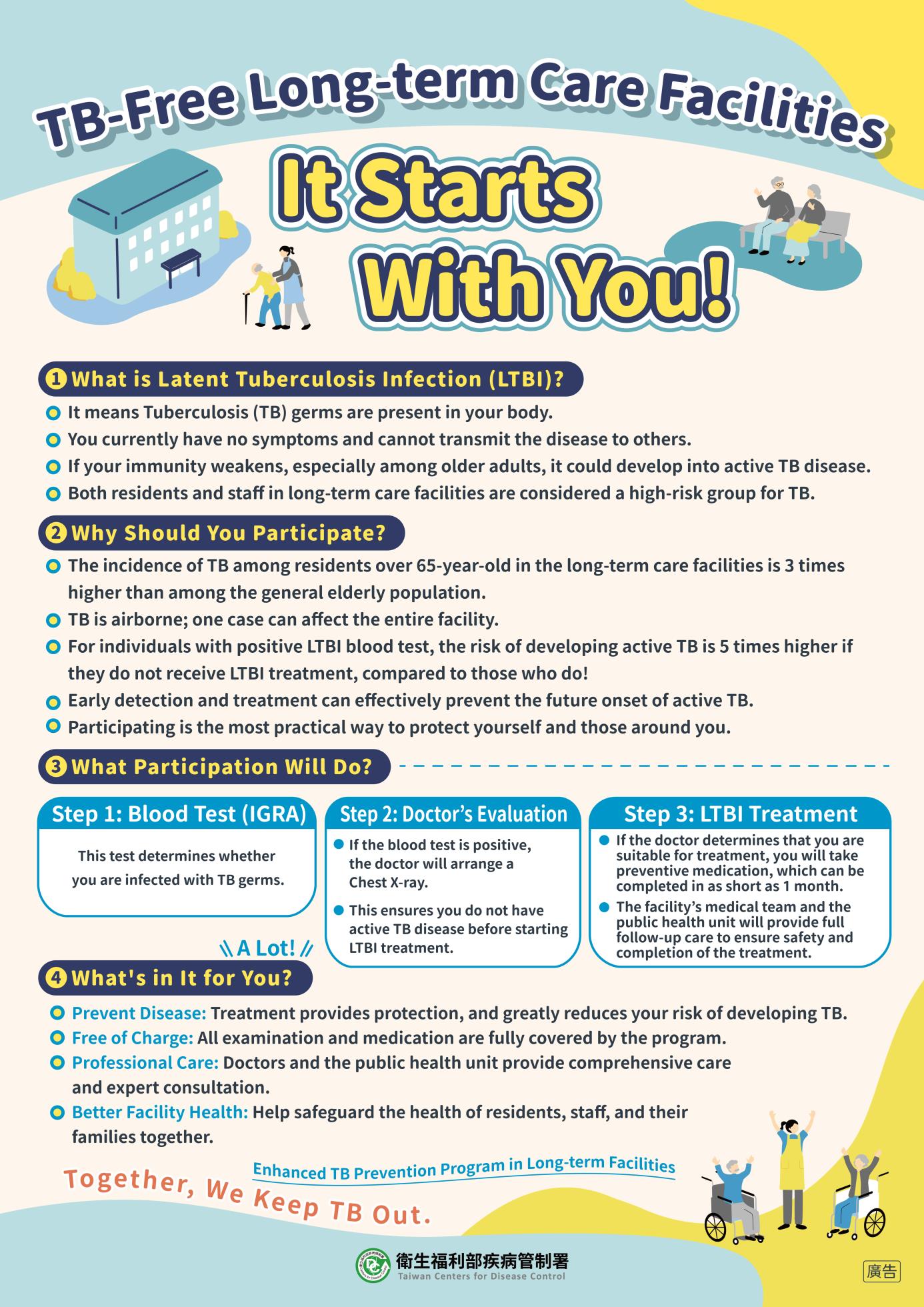
If you have the bacteria in your body but are not sick, it is called Latent TB Infection (LTBI).
You cannot spread TB to others if you have latent TB.
Preventive treatment can stop it from becoming active.